
Shares of paint companies faced pressure, falling up to 5 per cent on the BSE in Monday's (February 26) intraday trade amid concerns that Grasim Industries' entry into the paint sector will intensify the competition. Asian Paints reached a 10-month low of Rs 2,850, slipping nearly 5 per cent after brokerage firm CLSA downgraded the stock following the Birla Opus launch. The paint maker's stock traded at its lowest level since April 28, 2023.

Margins for the oil refining and retailing sector have moved off their peaks, and the average integrated margins (refining plus marketing) for oil marketing companies (OMCs) have normalised. The ascent in crude oil prices, combined with static retail prices, has depressed marketing margins for diesel and petrol. However, the fall in marketing margins has been offset by increased gross refining margins (GRMs).

The IPO market will be bustling next week, with four companies, including Bajaj Housing Finance, set to launch their initial share-sale to raise a total of Rs 8,390 crore. Besides these four main-board IPOs, nine SMEs are preparing to debut with their maiden public issues next week, targeting to collect Rs 254 crore. Together, these 13 firms are looking to raise Rs 8,644 crore through IPO.

ABB reported a weak quarter. Revenue was at Rs 2,910 crore, up only 5 per cent year-on-year (Y-o-Y), with operating profit at Rs 540 crore, up 23 per cent and net profit at Rs 440 crore.

'The President-elect firmly believes we can avoid conflict with the Chinese Communist party because they need our markets.'

While the capital spending is being maintained at 3.1 per cent of the GDP, a little more would have boosted economic growth even further, suggests Rajiv Memani.

Jefferies, IIFL, and JM Financial - none of which were in the top five last year - have now claimed the top spots in the league tables for equity capital markets (ECM) during the first nine months of calendar year 2023 (CY23), a period characterised by small- and mid-sized transactions. This shift marks a significant change, with these firms outperforming the bulge-bracket investment banks. According to data provided by Refinitiv, Jefferies leads the domestic ECM market, having handled share sales worth $2.3 billion, representing 12.4 per cent of the total volume of $18.4 billion for ECM transactions.

After climbing to a record high of Rs 523 on September 30, shares of commodity major Vedanta have come off over 15 per cent amid a fall in the overall markets. The Anil Agarwal-led firm's latest slump comes after its stock price doubled over the past one year. Is it a blip or a trend reversal?

The Centre may overshoot the Rs 56,260 crore target for dividend receipts from central public-sector enterprises (CPSEs) set for FY25 and is likely to end up getting around Rs 65,000 crore this financial year, according to a senior government official. This excludes dividend from nationalised banks and financial institutions. As on October 21, the Centre collected Rs 28,913 crore as dividend and other investment from CPSEs, accounting for over 50 per cent of the Budget Estimate for FY25.

The news of Dixon Technologies (India)'s tie-up with HP in addition to its existing Lenovo and Acer partnerships has led to a 5 per cent stock uptick since the start of the week. Dixon can target roughly 60 per cent of India's addressable IT hardware market with these contracts. Dixon targets Rs 48,000 crore in revenue from IT hardware under the PLI scheme over the next six years.

Shares of healthcare services major Max Healthcare Institute have gained over 23 per cent since the start of this month and the stock crossed the Rs 1 trillion mark on September 24. On September 25, it closed 989.85 apiece at the NSE. The gains were cornered on the back of a strong outlook for the sector and aggressive expansion plans for the chain led by acquisitions and organic growth.

Activist short-seller Nathan Anderson, known for his high-profile campaigns against the likes of Adani Group, said he is closing his firm, Hindenburg Research, not because of any threat -- legal or otherwise -- and that he stands by all its reports.

Ola Electric's initial public offering (IPO), of Rs 5,500 crore, is essentially aimed at ensuring the company maintain its top position in the electric two-wheeler segment, with incumbent players TVS and Bajaj Auto giving a fight to the number one player in market share. Most experts and competitors say the amount being raised is in line with the investment required to expand the electric-vehicle (EV) business. There are two discernible trends in the competitive electric two-wheeler market.

Equity benchmark indices Sensex and Nifty settled higher on Thursday, powered by a rally in banking and power stocks amid a largely firm trend in global markets. The stock markets mostly traded range-bound in the absence of any major trigger and persistent foreign capital outflows, traders said. The 30-share BSE Sensex rose 144.31 points, or 0.18 per cent, to settle at 81,611.41.

India remains the largest growing economy in the world, a senior official from the International Monetary Fund said, observing that the country's macroeconomic fundamentals are good. "India is said to remain the largest growing economy in the world. We project growth at seven per cent in FY24-25, supported by recovery in rural consumption, as there have been favourable harvests.

India's steel market is out of step with global trends. Global demand is weak with China at a huge supply surplus to its domestic demand, pushing down global steel prices. India's domestic demand for steel is strong, given the continuing infrastructure push and is likely to accelerate as urbanisation improves, and the auto sector continues to grow alongside the infrastructure push.
The primary market will remain abuzz with more than half a dozen companies, including Hyundai Motor India, Swiggy, and NTPC Green Energy, lined up initial public offerings over the next two months to raise around Rs 60,000 crore, merchant bankers said. Apart from these three firms, Afcons Infrastructure, Waaree Energies, Niva Bupa Health Insurance, One Mobikwik Systems, and Garuda Construction are among the companies planning to launch initial public offerings (IPOs) during October-November, they added. Together, these firms are looking to raise Rs 60,000 crore through their IPOs.

The top 10 fund houses are slowly losing ground to their smaller peers, even as they continue to hold the lion's share in the total assets under management (AUM) of the mutual fund (MF) industry, according to an analysis of the quarterly AUM for the past six years. These fund houses had an average AUM of Rs 38.8 trillion in the third quarter (Q3) of 2023-24, which is 79 per cent of the total industry AUM of Rs 49.2 trillion. The share has come down steadily since Q3 of 2019-2020, when the share stood at 84 per cent.

Godrej Consumer Products Ltd (GCPL) reported a 2 per cent year-on-year (Y-o-Y) increase in consolidated revenue to Rs 3,670 crore. Organic revenue growth in constant currency was up 14 per cent Y-o-Y. Consolidated operating profit was up 5 per cent to Rs 760 crore, profit before tax grew 10 per cent Y-o-Y to Rs 710 crore, and adjusted net profit grew 12 per cent Y-o-Y to Rs 490 crore.

Siemens delivered a strong margin performance and also reported high other income to beat consensus in the January-March quarter (Q2) of FY24 (the company's year-end is September 30). In addition, it has opted to demerge the energy vertical with a 1:1 award of shares in the newly demerged entity which will be listed by the end of this year (CY25).

NMDC, the country's largest iron-ore miner, posted a consolidated revenue in the January-March quarter of FY24. This was in line with estimates at Rs 6,500 crore, which was up 11 per cent year-on-year (Y-o-Y), and a 20 per cent quarter-on-quarter (Q-o-Q) rise on the back of realisations. Iron-ore production was 13.3 million tonnes (down 6 per cent and up 8 per cent Q-o-Q), while the sales stood at 12.5 MT (up 1 per cent Y-o-Y and up 10 per cent Q-o-Q).

Shares of auto component major, Samvardhana Motherson International, has gained 11.5 per cent on the bourses after the company approved the qualified institutions placement (QIP) issue and announced the calculation methodology for its compulsorily convertible debentures, or CCDs, into equity shares. Analysts cite strong investor response to the issue that has kept the sentiment positive for the stock. Brokerages, however, have a mixed view on the outlook for the auto parts supplier.

Equity supply may hit Rs 6 trillion soon.

Stock exchanges have intensified vigil on Small and Medium Enterprise (SME) listings by mandating more comprehensive financial disclosures and enhanced monitoring of utilisation of issue proceeds from investment bankers, amid rising instances of dubious practices. Bourses - responsible for vetting initial public offering (IPO) documents and granting approvals to SMEs - have tightened norms in recent weeks with further measures planned for new filings to safeguard investor interests, sources said.

'For those seeking regular income, these funds provide a steady stream of income through dividends.'

The VBL board approved the purchase of SBC Tanzania for Rs 1,304 crore and SBC Beverages Ghana for Rs 127 crore. These own manufacturing/distribution rights for NARTD (PepsiCo branded) beverages in Tanzania and Ghana. The acquisitions will help VBL gain ground in East and West Africa.

The biggest bounce is in the realty sector, where the industry index jumped 80%. There's been a turnaround also in automobiles and ancillaries (up 45%). The pharma and health care indices have a welcome return of roughly 35%.

A resurgence in Saudi Arabian supplies of crude oil to India coupled with an attack on an Iraqi tanker in August carrying crude to Europe may result in improved bargaining power for India with West Asian and Russian suppliers for winter supplies. Shipments of Saudi oil rebounded in September from August, surging to the highest since March while Russian oil shipments rose marginally as Saudi Arabia tried to claw back market share in Asia, according to industry sources and ship tracking data.

Tasting success with the relaunch of Sensex derivatives in the onshore market, BSE is preparing for the 'offshore' debut of its 30-share index, which has become synonymous with the domestic markets. Sources in the know said that the India International Exchange (India INX), a subsidiary of BSE, received approval in July from the International Financial Services Centres Authority (IFSCA) to launch Sensex 30 derivatives contracts.

The Rs 6,145-crore initial public offer of electric two-wheeler company Ola Electric Mobility got fully subscribed on the second day of bidding on Monday, driven by demand from retail investors and non-institutional investors. The initial share sale received bids for 49,43,63,610 shares against 46,51,59,451 shares on offer, translating into 1.06 times subscription, according to the NSE data.

From the 30 Sensex firms, Mahindra & Mahindra, State Bank of India, Bharti Airtel, Hindustan Unilever, Kotak Mahindra Bank, UltraTech Cement, Adani Ports, and Tata Steel were the biggest gainers. ICICI Bank, IndusInd Bank, Asian Paints, Tech Mahindra, Infosys, HCL Technologies, Tata Consultancy Services, and Larsen & Toubro were among the laggards.
Benchmark indices Sensex and Nifty climbed to fresh all-time highs on Thursday driven by buying in auto shares amid a sharp rally in Asian markets. The BSE Sensex jumped 666.25 points or 0.78 per cent to settle at an all-time high of 85,836.12. During the day, it reached a record intra-day peak of 85,930.43, surging 760.56 points or 0.89 per cent.

Out of 3,871 recovery certificates issued by the regulator in various cases, 807 have been certified as difficult to recover.
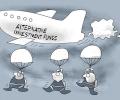
Alternative investment funds (AIFs) are yet to fully demat the outstanding units even as the deadline ended on October 31. Industry players say they are working on the transition from physical to electronic with the depositories Central Depository Services (India) Limited (CDSL) and National Securities Depository Limited (NDSL). Some said they are hoping for some relaxation from the market regulator Securities and Exchange Board of India (Sebi), given the teething problems they are facing.

'Along with Blackstone, we would be keen to look at opportunities in the North.'
Most market analysts are expecting the momentum to shift towards 'quality' and 'growth' stocks in 2024 after the outperformance of 'value' stocks over the past three years. 'Value' stocks are generally well-established companies with steady profits that are trading at a discount to what they are intrinsically worth. Companies in sectors such as commodities, industrials, commercial vehicles and public sector units (PSUs) fall in this bracket.

The Securities and Exchange Board of India (Sebi) has permitted 100 per cent contribution from non-resident Indians (NRIs) and overseas citizens of India (OCIs) in the corpus of foreign portfolio investors (FPIs) based out of Gujarat International Finance Tec-City (GIFT City), the country's international financial services centre (IFSC). However, the Indian diaspora is yet to fully embrace this new route. The regulator allowed this route to enhance the fund ecosystem at GIFT City and attract genuine investments from overseas Indians.

Benchmark equity indices Sensex and Nifty slumped over 1 per cent on Friday, tracking a weak trend in global markets and fresh foreign fund outflows. Falling for the third day running, the 30-share BSE Sensex tumbled 1,017.23 points or 1.24 per cent to settle at 81,183.93.
 © 2026 Rediff.com - Investor Information - Advertise with us - Disclaimer - Privacy Policy - Sitemap - Feedback - About us - Terms of use - Grievances